dometic rv ac manual
Dometic RV AC Manual: Comprehensive Troubleshooting & Maintenance
This detailed manual provides essential guidance for diagnosing, repairing, and maintaining your Dometic RV air conditioner, ensuring cool and comfortable travels.
Dometic RV air conditioners are renowned for providing reliable cooling solutions in recreational vehicles, ensuring comfortable journeys regardless of external temperatures. These systems are designed to withstand the rigors of road travel and varying climates, offering efficient performance and durability. Understanding the basics of your Dometic AC unit is crucial for effective troubleshooting and maintenance.
This guide will equip you with the knowledge to address common issues, perform routine upkeep, and maximize the lifespan of your unit. From identifying different AC types to interpreting error codes, we’ll cover everything you need to know to maintain optimal climate control within your RV. Proper care translates to fewer breakdowns and enhanced travel enjoyment.
Understanding Dometic AC Unit Types
Dometic offers a variety of RV air conditioner models, each designed to suit different RV sizes and cooling needs. The most common types include ducted and non-ducted systems. Ducted units distribute cooled air through vents, providing more even temperature distribution throughout the RV. Non-ducted units, often called “box” ACs, deliver airflow directly from the unit itself.
Furthermore, Dometic units vary in BTU (British Thermal Unit) capacity, indicating their cooling power. Higher BTU ratings are suitable for larger RVs or hotter climates. Understanding your specific model – identified by its model number – is vital for accessing the correct troubleshooting information and replacement parts. Knowing your AC type allows for targeted maintenance and repair efforts.
Common Dometic RV AC Problems
Frequent issues include the unit failing to power on, reduced cooling efficiency, water leaks, and unusual operational noises – all impacting comfort.
AC Unit Not Turning On
If your Dometic RV AC unit isn’t starting, begin with the simplest checks; Verify the power supply – ensure the RV is connected to a reliable power source and the circuit breaker hasn’t tripped.
Inspect the thermostat settings; confirm it’s set to ‘Cool’ and the desired temperature is lower than the current cabin temperature. A faulty thermostat can also prevent operation. Check the emergency shut-off switch, if equipped, and ensure it’s engaged.
Further investigation involves examining the unit’s control board and potentially testing the start capacitor. Always disconnect power before inspecting electrical components! If these steps don’t resolve the issue, professional assistance may be required.
Insufficient Cooling Performance
Reduced cooling from your Dometic RV AC often stems from airflow restrictions or component inefficiencies. First, check and replace the air filter – a clogged filter significantly limits airflow. Inspect the condenser coils located on the roof; dirt and debris impede heat dissipation. Carefully clean them with a gentle spray of water (power off!).
Ensure vents aren’t blocked by objects inside the RV. A failing capacitor or low refrigerant levels can also cause poor cooling. Refrigerant handling requires a certified technician! Verify the fan motor is operating at the correct speed. If issues persist after these checks, a professional diagnosis is recommended.
Water Leaks from the AC Unit
Water leaks from your Dometic RV AC are frequently caused by a clogged condensate drain line. This line removes condensation produced during the cooling process. Locate the drain line (usually a small tube extending from the unit) and gently clear any obstructions with a flexible wire or compressed air – avoid damaging the line!
Inspect the roof seal around the AC unit for cracks or deterioration; reseal if necessary. Internal ice buildup, due to low airflow or refrigerant issues, can also melt and cause leaks. If the leak persists after addressing the drain and seal, professional inspection for internal problems is crucial.
Strange Noises During Operation
Unusual sounds from your Dometic RV AC often indicate a mechanical issue requiring attention. Rattling could signify loose screws or debris within the unit – carefully inspect and tighten any loose components. Whining noises may point to a failing fan motor or bearing, necessitating replacement.
Clicking sounds can sometimes be related to the capacitor or control board. A loud humming could suggest a compressor problem. Never attempt to disassemble the compressor yourself! If the noise is persistent or accompanied by reduced cooling, it’s best to consult a qualified RV technician for diagnosis and repair to prevent further damage.

DIY Troubleshooting Steps
Begin with simple checks: power supply, thermostat settings, and air filter condition. These initial steps can often resolve common issues quickly and easily.
Checking the Power Supply
Ensuring a stable power supply is the first step in troubleshooting your Dometic RV AC unit. Begin by verifying the circuit breaker dedicated to the air conditioner hasn’t tripped. Reset it if necessary. Next, check the power cord connection at both the AC unit and the power source, ensuring it’s securely plugged in.
Use a multimeter to confirm voltage is reaching the AC unit; a reading significantly below the required voltage indicates a power supply issue. Inspect the wiring for any signs of damage, such as fraying or corrosion. If you’re connected to shore power, test the outlet with another device to rule out a problem with the campground’s electrical system. Remember safety first – disconnect power before inspecting any wiring!
Inspecting the Thermostat Settings
Incorrect thermostat settings are a frequent cause of AC issues. First, confirm the thermostat is set to “Cool” mode and not “Heat” or “Fan Only.” Lower the set temperature significantly below the current cabin temperature to force the AC to engage. Ensure the thermostat’s batteries are fresh, as low batteries can cause erratic behavior or a complete failure to operate.
If using a digital thermostat, check for any error codes displayed. For 5-button control centers, familiarize yourself with the operational logic. Verify the fan speed is set appropriately; a lower speed may reduce cooling effectiveness. A faulty thermostat may need replacement if it consistently fails to regulate temperature correctly.
Air Filter Maintenance & Replacement
A clogged air filter restricts airflow, significantly reducing cooling efficiency and potentially damaging the AC unit. Regularly inspect the air filter – ideally monthly during peak season – for dirt and debris. A dirty filter forces the blower motor to work harder, increasing energy consumption and wear.
Most Dometic RV AC units utilize easily accessible filters; Remove the filter and clean it with mild soap and water, ensuring it’s completely dry before reinstalling. If the filter is damaged or excessively dirty, replace it with a new one of the correct size. Consistent filter maintenance is a simple yet crucial step in prolonging your AC’s lifespan.
Condenser Coil Cleaning
The condenser coil, located on the exterior of your RV’s AC unit, dissipates heat. Over time, it accumulates dust, pollen, and debris, hindering its ability to release heat effectively. This results in reduced cooling performance and increased energy usage. Cleaning the coils is vital for optimal operation.
Turn off the AC unit and carefully remove any protective covers. Gently use a soft brush or a fin comb to remove loose debris. For stubborn dirt, a coil cleaner specifically designed for AC units can be applied, following the product’s instructions carefully. Rinse thoroughly with water, avoiding high pressure that could damage the fins.
Fan Motor Inspection
A properly functioning fan motor is crucial for both air circulation and heat exchange within your Dometic RV AC unit. Regularly inspect the fan motor for signs of wear, such as unusual noises (squealing, grinding), excessive vibration, or a slow fan speed. These symptoms often indicate bearing failure or motor weakness.
With the power off, carefully check the fan blades for damage or obstructions. Ensure they spin freely. If the motor seems stiff or makes noise, it may require lubrication (consult your Dometic manual for recommended lubricants) or replacement. A failing fan motor significantly impacts cooling efficiency.
Advanced Troubleshooting
Delve into complex diagnostics, including capacitor testing, compressor evaluation, refrigerant leak detection, and control board assessments for optimal performance.
Capacitor Testing
Capacitors are crucial for starting and running both the fan and compressor motors within your Dometic AC unit. A failing capacitor is a common cause of motor failure, often presenting as a humming sound but no actual operation.
Safety First: Always disconnect power before attempting any electrical testing! Use a multimeter with a capacitance testing function. Discharge the capacitor fully before handling – a resistor is recommended for this; Compare the measured capacitance to the value printed on the capacitor itself. A significant deviation (typically more than 6-10%) indicates a faulty capacitor needing replacement. Visually inspect for bulging or leaking, further confirming failure. Replacing a faulty capacitor is often a straightforward repair, restoring AC functionality.
Compressor Issues & Diagnosis
The compressor is the heart of your Dometic AC system, responsible for circulating refrigerant and providing cooling. Diagnosing compressor problems requires caution and some electrical knowledge.
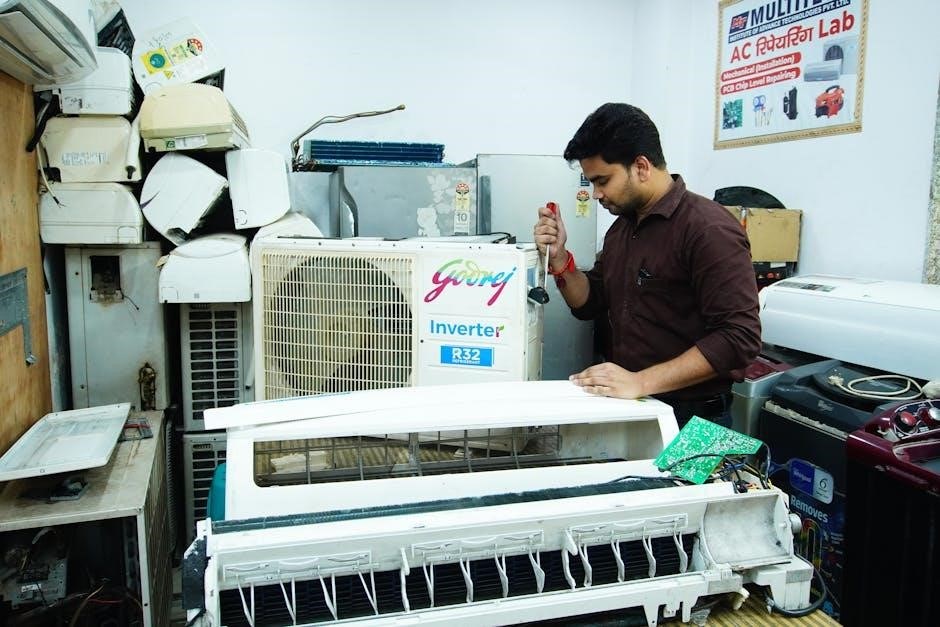
Initial checks involve verifying power reaches the compressor and listening for its operation. A humming sound without cooling suggests a potential start or run capacitor issue (addressed elsewhere). If the compressor isn’t running at all, a multimeter can test for continuity. Important: Compressor issues often indicate refrigerant leaks or internal failure, requiring professional intervention. Attempting repairs yourself without proper training and equipment can be dangerous and void warranties. A failed compressor usually necessitates replacement.
Refrigerant Leak Detection (Caution!)
Refrigerant leaks significantly reduce cooling performance and require professional attention. Handling refrigerant is regulated and potentially dangerous; attempting DIY repairs is strongly discouraged.
Signs of a leak include insufficient cooling despite a functioning compressor, and the presence of an oily residue near connections. Specialized leak detection equipment, like electronic sniffers, are used by technicians to pinpoint leak locations. Never attempt to vent refrigerant into the atmosphere – it’s harmful to the environment and illegal. If you suspect a leak, immediately turn off the AC unit and contact a certified RV technician for diagnosis and repair. Proper leak repair involves evacuation, nitrogen pressure testing, and refrigerant recharge.
Control Board Problems
The control board is the “brain” of your Dometic AC, managing functions like fan speed, temperature, and mode selection. Malfunctions can cause erratic behavior or complete AC failure.
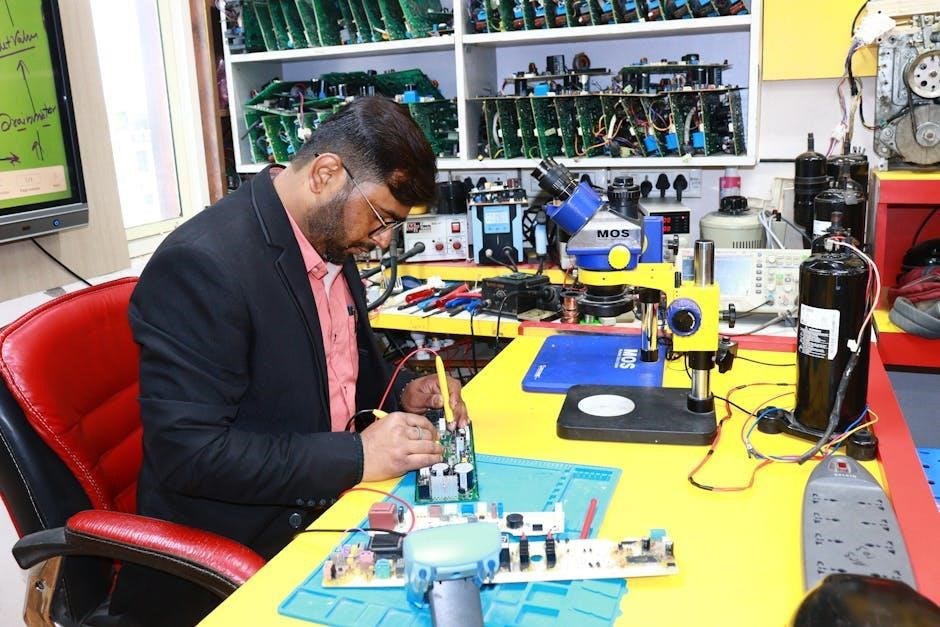
Symptoms include the AC not responding to thermostat adjustments, the fan running continuously, or error codes displayed on the control center. Diagnosing control board issues requires a multimeter and understanding of electrical circuits – it’s generally best left to professionals. Visual inspection for burnt components or damaged traces is a starting point. Replacement often involves programming a new board to match your specific AC model. Caution: Disconnect power before inspecting or replacing the control board to avoid electrical shock.
Dometic Comfort Control Center Troubleshooting
Effectively diagnose issues with your 5-button control center, interpret error codes, and resolve remote control problems for optimal AC operation.
5-Button Control Center Operation
The Dometic 5-button control center is the primary interface for managing your RV air conditioner. Understanding each button’s function is crucial for effective operation. The “Power” button initiates or terminates the AC unit’s operation. “Mode” allows cycling through Cool, Heat (if equipped), and Fan-Only settings. “Fan Speed” controls the blower’s intensity – typically Low, Medium, and High. “Temperature” adjusts the desired cabin temperature, usually in one-degree increments. Finally, the “Economy” button, when activated, optimizes energy consumption by adjusting fan speeds and temperature settings.
Proper use of these buttons ensures comfortable climate control. Refer to your specific model’s manual for detailed instructions, as button layouts and functionalities can vary slightly.
Error Code Interpretation
Dometic’s Comfort Control Center often displays error codes to indicate specific issues with the air conditioning system. These codes are vital for accurate troubleshooting. A common code, “E100,” typically signals a temperature sensor fault, requiring inspection of the sensor and its wiring. “E001” often indicates a communication error between the control board and the AC unit itself. Other codes may relate to fan motor malfunctions, compressor issues, or thermostat problems.
Consult your Dometic RV AC manual for a complete list of error codes and their corresponding solutions. Ignoring error codes can lead to further damage and costly repairs.
Remote Control Issues
If your Dometic RV AC remote control isn’t functioning, begin by checking the batteries and ensuring they are correctly installed. Next, verify there’s a clear line of sight between the remote and the Comfort Control Center’s receiver. Interference from sunlight or other electronic devices can sometimes disrupt the signal. Try resetting the remote by removing and reinserting the batteries.
If problems persist, consult the manual for pairing instructions, as some remotes require synchronization with the control board. A faulty remote may need replacement; Dometic offers compatible replacements online or through authorized dealers.
Maintenance for Optimal Performance
Proactive maintenance, including regular inspections and cleaning, significantly extends the lifespan and efficiency of your Dometic RV air conditioning system.
Pre-Season AC Inspection
Before embarking on your RV adventures each season, a thorough pre-season inspection of your Dometic AC unit is crucial. Begin by visually examining the roof seal for any cracks or damage, ensuring a watertight barrier.
Next, carefully inspect the condenser coils for debris, leaves, or insect nests, as these obstructions hinder cooling efficiency. Clean them gently with a soft brush or coil cleaner.
Check all electrical connections for corrosion or looseness, and verify the proper operation of the thermostat. Finally, run the AC unit briefly to confirm it cycles on and off correctly, listening for any unusual noises.
Regular Cleaning Schedule
Maintaining a consistent cleaning schedule is vital for optimal Dometic RV AC performance and longevity. Aim to clean or replace the air filter monthly, or more frequently during dusty conditions, to ensure efficient airflow.
Every three months, thoroughly clean the condenser coils with a soft brush and coil cleaner, removing any accumulated debris. Inspect and clean the evaporator coils annually, if accessible, to prevent mold growth.
Periodically wipe down the exterior of the AC unit with a mild detergent and water. Regular cleaning prevents buildup, improves cooling efficiency, and extends the lifespan of your Dometic AC system.
Roof Seal Inspection & Repair
The roof seal surrounding your Dometic RV AC unit is crucial for preventing water leaks and protecting your RV’s interior. Inspect the sealant at least twice a year – before and after the travel season – for cracks, gaps, or deterioration.
Address any damage promptly using a self-leveling sealant specifically designed for RV roofs. Thoroughly clean the area before applying new sealant, ensuring a strong and watertight bond.
Regular inspection and repair of the roof seal will safeguard against costly water damage and maintain the integrity of your RV’s roof structure, ensuring years of reliable use.
Winterization Procedures
Proper winterization is vital to protect your Dometic RV AC unit from freezing temperatures and potential damage. Before storing your RV for the winter, thoroughly clean the AC unit, including the condenser coils and air filter.
Cover the unit with a protective cover to shield it from snow, ice, and debris. Consider adding a vent cover to further prevent moisture buildup.
Ensure all water lines associated with the AC are drained to prevent freezing and cracking. Following these steps will help ensure your Dometic AC unit is ready for another season of reliable cooling.
When to Call a Professional
For complex electrical issues, refrigerant handling, or component replacements, always consult a qualified RV technician for safe and effective repairs.
Electrical Issues Requiring Expertise
Dealing with RV electrical systems can be dangerous, and certain issues absolutely demand a professional’s attention. Never attempt repairs if you’re uncomfortable or lack the necessary knowledge. Problems like a tripped breaker that won’t reset, burnt wiring, or a malfunctioning control board necessitate a qualified RV technician.
Incorrect wiring can lead to fires or damage your AC unit further. Technicians possess specialized tools for accurate diagnosis and safe repairs. They understand the intricacies of RV electrical systems, including proper grounding and voltage requirements. Ignoring these warning signs could create a significant safety hazard, potentially damaging your RV and endangering occupants. Prioritize safety and seek professional help immediately.
Refrigerant Handling & Repair
Refrigerant work requires EPA certification and specialized equipment; it’s strictly a job for qualified technicians. Attempting to handle refrigerant yourself is illegal and extremely dangerous. Refrigerant leaks not only diminish cooling performance but also pose environmental hazards and potential health risks.
Professionals use leak detection tools and recovery machines to safely remove, repair, and recharge the system. They adhere to strict regulations regarding refrigerant handling and disposal. Improper handling can release harmful chemicals into the atmosphere. A technician will accurately diagnose the leak, repair the source, and ensure the system is properly sealed and charged for optimal efficiency and safety. Do not attempt DIY refrigerant repairs.
Complex Component Replacement
Replacing major components like the compressor, evaporator, or condenser requires specialized knowledge, tools, and often, a complete system evacuation and recharge. These tasks are beyond the scope of typical DIY repairs and necessitate a qualified HVAC technician. Incorrect installation can lead to system failure, inefficiency, or even safety hazards.
A professional will ensure proper component compatibility, perform necessary brazing or welding, pressure test the system for leaks, and accurately recharge it with the correct refrigerant type and amount. Attempting these replacements without the proper expertise can void warranties and create further, more costly damage. Prioritize professional assistance for complex repairs.
Resources & Manual Downloads
Access official Dometic support, locate your model number for specific manuals, and connect with online forums for community assistance and troubleshooting.
Locating Your Dometic AC Model Number
Finding your Dometic RV air conditioner’s model number is crucial for accessing the correct documentation, parts, and support resources. Typically, the model number is located on a sticker or label affixed to the unit itself. Begin by carefully inspecting the top of the AC unit, often found under the shroud or cover.
Look for a silver or white label containing a series of numbers and letters – this is your model number. It may also be located on the side of the unit, or even on the base.
If you’re unable to find it directly on the AC, check your original RV documentation or purchase receipts, as the model number may be listed there. Having this number readily available will significantly streamline any troubleshooting or repair processes.
Official Dometic Support Website
Dometic’s official website is an invaluable resource for all your RV air conditioning needs. You can find a wealth of information, including downloadable manuals, troubleshooting guides, parts diagrams, and frequently asked questions.
Visit dometic.com and navigate to the “Support” or “Service” section. From there, you can search for your specific AC model number to access tailored resources.
The website also offers contact information for Dometic’s customer support team, allowing you to reach out directly with any questions or concerns. Registering your product online can also provide access to exclusive content and updates. Utilizing this official support channel ensures you receive accurate and reliable assistance.
Online Forums & Communities
RV owner forums and online communities are excellent platforms for sharing experiences and seeking advice regarding Dometic RV air conditioners. These spaces often contain threads dedicated to specific models and common issues, offering practical solutions from fellow enthusiasts.
Websites like RV.net, iRV2.com, and various Facebook groups dedicated to RVing provide a collaborative environment where you can ask questions, share troubleshooting tips, and learn from others’ successes and failures.
Searching these forums for your specific problem can often yield valuable insights and DIY repair guidance. Remember to verify information and exercise caution when implementing advice found online.