electric fireplace remote control instructions

Electric fireplace remote controls offer convenience and safety, allowing users to adjust settings effortlessly. Recent incidents, like a fire in Ohio caused by a faulty remote, highlight the importance of proper usage and understanding. This guide provides comprehensive instructions to ensure safe and efficient operation of your electric fireplace remote control.
1.1 Overview of Electric Fireplaces and Remote Controls
Electric fireplaces combine ambiance and convenience, offering realistic flame effects and adjustable heat. Remote controls enhance user experience by allowing easy adjustment of settings like flame intensity, heat output, and timers. Recent incidents, such as a fire in Ohio caused by a faulty remote, underscore the importance of understanding proper usage. This guide provides essential insights to maximize safety and functionality.
1.2 Importance of Proper Remote Control Usage
Proper use of an electric fireplace remote control is crucial for safety and functionality. Incorrect usage can lead to hazards, such as overheating or fire, as seen in incidents like the Ohio fire caused by a faulty remote. Adhering to guidelines ensures efficient operation, prevents malfunctions, and prolongs the lifespan of both the remote and fireplace. Correct usage also minimizes energy waste and enhances overall user experience.

Components of an Electric Fireplace Remote Control
An electric fireplace remote control typically includes standard buttons for power, heat, and flame settings, along with advanced features like timers and thermostats. Additional components may include an LCD screen, navigation buttons, and a power-saving mode. Some remotes also feature safety locks to prevent accidental activation, ensuring safe and efficient operation.
2.1 Standard Buttons and Their Functions
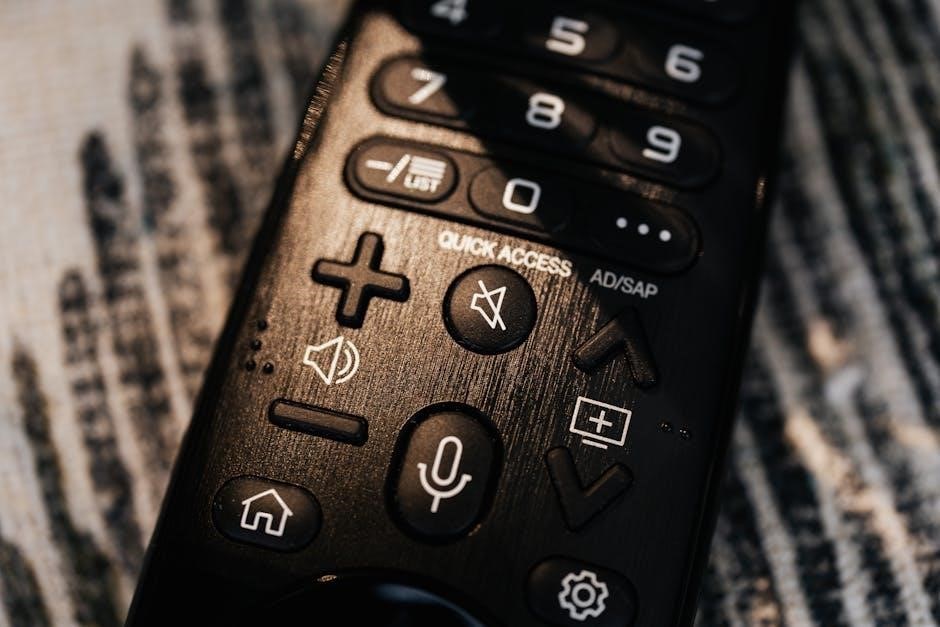
Standard buttons on an electric fireplace remote typically include power, heat up/down, flame up/down, and timer controls. The power button turns the unit on/off, while heat buttons adjust temperature settings. Flame buttons control the visual intensity of the flames. Timer buttons set operation duration. Some remotes also include LED indicators showing current settings. Regular checks of these buttons ensure proper function and safety, preventing incidents like the Ohio fire caused by a faulty remote.
2.2 Advanced Features (Timer, Thermostat, etc.)
Advanced features on electric fireplace remotes include timers, thermostats, and smart app integration. The timer allows scheduling operation duration, while the thermostat maintains a set temperature. Some remotes offer customizable flame patterns and brightness. Smart app integration enables control via smartphones. These features enhance convenience and energy efficiency. Proper use of these advanced functions ensures safe operation, preventing incidents like the Ohio fire caused by a faulty remote control.
Installation and Setup of the Remote Control
Unbox and prepare the remote, ensuring all components are included. Pair the remote with your electric fireplace by following the manufacturer’s pairing instructions. Install batteries correctly to ensure proper functionality and avoid issues like the Ohio fire incident caused by a faulty remote control. Proper setup ensures safe and efficient operation.
3.1 Unboxing and Initial Preparation
Begin by carefully unboxing the remote control and ensuring all components are included. Inspect the remote for any visible damage. Read the manual to familiarize yourself with the device. Locate the receiver on your electric fireplace and ensure it is accessible. Clear the area around the fireplace to avoid obstructions. Check for any physical damage to the remote or receiver, as issues like the Ohio fire incident highlight the importance of proper setup.
3.2 Pairing the Remote with the Fireplace
Pairing the remote with your electric fireplace ensures seamless communication. Turn on the fireplace and locate the pairing button, usually found near the receiver. Press and hold the button until the indicator light blinks. Release and press the remote’s power button to establish a connection. If pairing fails, consult the manual or reset the receiver. Proper pairing is crucial to avoid issues like the Ohio fire incident, where a faulty remote caused significant damage.
3.3 Battery Installation and Power Management
Proper battery installation is essential for remote functionality. Insert the recommended batteries (usually AA or AAA) into the remote, ensuring correct polarity. Avoid mixing old and new batteries to prevent power issues. If the remote uses a rechargeable option, charge it as instructed. Replace batteries when power weakens to maintain consistent performance. Always turn off the fireplace when not in use to conserve energy and prevent overheating, as seen in recent incidents like the Ohio fire caused by a faulty remote.
Safety Precautions When Using the Remote
Keep the remote out of children’s and pets’ reach to avoid accidental activation. Avoid overheating by not leaving the fireplace on unattended. Follow manufacturer guidelines for safe usage and maintenance to prevent incidents like the Ohio fire caused by a faulty remote.
4.1 General Safety Guidelines
Electric fireplace remote controls require attention to safety. Keep them out of children’s and pets’ reach to prevent accidental activation. Avoid overheating by not leaving the fireplace unattended. Ensure the remote is used correctly to prevent malfunctions. Regular maintenance and following manufacturer guidelines are essential. Improper use can lead to incidents like the Ohio fire caused by a faulty remote. Stay vigilant and prioritize safety.
4.2 Avoiding Common Hazards (Overheating, etc.)
To prevent hazards, ensure your electric fireplace and remote are used correctly. Overheating can occur if the fireplace is obstructed or left unattended. Keep flammable materials away and monitor temperature levels. Regularly inspect the remote and fireplace for damage. Avoid using the remote near water or in humid conditions. Proper maintenance and adherence to safety guidelines can prevent incidents like the Ohio fire caused by a faulty remote control.

Operating the Electric Fireplace with the Remote
Use the remote to effortlessly turn your electric fireplace on/off, adjust heat settings, and customize flame effects. Utilize the timer for automated operation. Ensure the remote is kept dry and out of children’s reach to avoid accidents. Regularly monitor temperature levels to prevent overheating, as highlighted by incidents like the Ohio fire caused by a faulty remote control.
5.1 Turning the Fireplace On/Off
To turn your electric fireplace on or off using the remote, locate the power button, typically labeled with a circle or line symbol. Press the button once to activate the fireplace and again to shut it off. Ensure the fireplace is properly plugged in and the remote has functional batteries. Always refer to your user manual for specific instructions, as designs may vary. Proper usage helps prevent incidents like the Ohio fire caused by a faulty remote.
5.2 Adjusting Heat and Flame Settings
Use the remote’s up and down arrows to adjust heat levels, typically displayed on the fireplace’s control panel or the remote’s LCD screen. Flame settings can also be modified using similar buttons, offering realistic visuals. Ensure the fireplace is on before making adjustments. For optimal performance, set the thermostat to your desired temperature. Always follow the manual for specific instructions, as controls may vary. Proper adjustment enhances both comfort and safety, preventing incidents like the Ohio fire caused by a faulty remote.
5.3 Using the Timer Function
The timer function allows you to set a specific duration for the fireplace to operate. Press the “Timer” button on the remote, then use the directional arrows to select your desired time. Confirm with “OK” or “Set.” The fireplace will automatically turn off after the timer expires. This feature enhances convenience and safety, preventing overheating incidents like the Ohio fire caused by a faulty remote. Always monitor the timer to ensure optimal performance.
Troubleshooting Common Remote Control Issues
If your remote isn’t responding, check for battery issues or signal obstructions. For malfunctions, reset the remote or consult the user manual. Addressing these promptly prevents incidents like the Ohio fire caused by a faulty remote, ensuring safe and reliable operation.
6.1 Remote Not Responding to Commands
If your remote isn’t responding, first check the batteries. Ensure they are installed correctly and not depleted. Replace with new ones if necessary. Next, verify there’s no obstruction between the remote and fireplace. If issues persist, reset the remote by pressing and holding the power button for 10 seconds. Consult the user manual for specific instructions. Addressing this promptly is crucial, as seen in the Ohio fire incident caused by a faulty remote.
6.2 Incorrect or Intermittent Functionality
If the remote exhibits incorrect or intermittent behavior, check for weak or corroded batteries. Ensure buttons are clean and free from debris. Reset the remote by removing batteries for 30 seconds. Re-pair the remote with the fireplace following the manual’s instructions. If issues persist, inspect the infrared sensor for obstructions or dirt. Addressing these problems is vital, as seen in the Ohio fire incident caused by a faulty remote control malfunction.
6.3 Fireplace Malfunctions Linked to Remote Use
Fireplace malfunctions tied to remote use can stem from signal interference or faulty sensors. Ensure the remote’s infrared sensor is clear and unobstructed. Verify proper battery installation and check for worn-out buttons. If the fireplace behaves erratically, reset the remote and re-pair it with the unit. Addressing these issues is crucial, as seen in the Ohio incident where a faulty remote caused a fire, highlighting the importance of regular maintenance and proper usage.

Maintenance Tips for the Remote Control
Regularly clean the remote with a soft cloth to remove dirt and dust. Replace batteries promptly when power weakens. Update or reset the remote to fix glitches, ensuring smooth operation and safety, as highlighted by incidents like the Ohio fire caused by a faulty remote.
7.1 Cleaning the Remote
Use a soft, dry cloth to wipe the remote’s surface, removing dust and dirt. For stubborn stains, lightly dampen the cloth with water, avoiding harsh chemicals. Gently scrub buttons and crevices where debris accumulates. Regular cleaning prevents malfunction and ensures smooth operation. This simple maintenance step can help avoid issues like sticky buttons or faulty signals, contributing to overall safety and efficiency, as highlighted by incidents like the Ohio fire caused by a faulty remote.
7.2 Replacing Batteries
Replace remote batteries when they show signs of weakness, such as dimming or delayed responses. Use the correct battery type specified in the manual. Insert batteries with the correct polarity to avoid damage. Avoid mixing old and new batteries. Proper installation ensures reliable performance. Dispose of old batteries safely. Regular replacement prevents unexpected malfunctions, ensuring smooth control over your electric fireplace, as highlighted by incidents like the Ohio fire caused by a faulty remote.
7.3 Updating or Resetting the Remote
Updating or resetting your electric fireplace remote ensures optimal performance and addresses potential issues. Regularly check for firmware updates to enhance functionality. Resetting the remote can resolve connectivity problems or restore default settings. Always follow the manufacturer’s instructions for updates and resets. This helps prevent malfunctions, such as the Ohio incident where a faulty remote caused a fire. Keep your remote in top condition for reliable operation.

Advanced Features of Modern Remote Controls
Modern electric fireplace remotes offer smart app integration, voice control, and customizable settings for enhanced convenience. These features improve functionality and safety, preventing incidents like the Ohio fire.
8.1 Smart App Integration
Smart app integration allows users to control their electric fireplace remotely via smartphones. This feature enables adjusting heat, flame settings, and timers through a dedicated app. It also provides scheduling options and energy monitoring. Compatible with smart home systems, this technology enhances convenience and energy efficiency. Recent incidents, like the Ohio fire, highlight the importance of such advancements for safer and more reliable operation. This integration ensures seamless control and peace of mind.
8.2 Voice Control Compatibility
Voice control compatibility enables users to manage their electric fireplace using smart speakers like Alexa or Google Home. This feature allows hands-free adjustments of heat, flames, and timers. Compatible with modern smart home systems, it enhances convenience and accessibility. Recent advancements ensure seamless integration, making it easier to control your fireplace without physical interaction. This innovation modernizes the fireplace experience, offering a futuristic and efficient way to enjoy comfort at home.
8.3 Customizable Settings
Modern electric fireplace remotes often feature customizable settings, allowing users to tailor their experience. Preset modes, flame brightness, color, and heat levels can be adjusted to personal preferences. Some remotes enable scheduling, turning the fireplace on/off at specific times. These settings enhance convenience and energy efficiency, ensuring a personalized ambiance. Advanced models may also store favorite configurations, making it easy to recreate desired settings with a single button press.
Energy Efficiency and Remote Control Usage
Electric fireplace remotes enhance energy efficiency by allowing precise control over heat and flame settings. Programmable timers and thermostat settings optimize energy use, reducing utility bills.
9.1 Optimizing Energy Consumption
Electric fireplace remotes help optimize energy consumption by enabling precise control over heat output and flame settings. Programmable timers and thermostats allow users to set specific durations and temperatures, reducing unnecessary energy use. Smart features like automatic shut-off and eco-mode further enhance efficiency, ensuring the fireplace operates only when needed. Regular maintenance, such as updating settings and replacing batteries, also supports energy-saving performance.
9.2 Using the Remote to Monitor Energy Usage
Modern electric fireplace remotes often include features to monitor energy usage, helping users track consumption. Some models display real-time energy use, while others provide weekly or monthly summaries. This data allows users to adjust settings for efficiency. Advanced remotes may integrate with smart apps, offering detailed reports and enabling adjustments to minimize energy waste. Monitoring energy usage ensures cost savings and environmental benefits.

Customer Reviews and Feedback on Remote Controls
Customers praise electric fireplace remotes for convenience and ease of use, while some report issues with signal range and battery life. Feedback highlights the need for improved reliability and user-friendly designs to enhance overall satisfaction and safety, as seen in recent incidents like the Ohio fire caused by a faulty remote.
10.1 Common Praise for Remote Functionality
Users often praise electric fireplace remotes for their convenience and ease of use. The ability to adjust heat, flame settings, and timers with the touch of a button enhances comfort and efficiency. Many appreciate the intuitive design and how it simplifies controlling their fireplace. This functionality not only adds to the ambiance but also ensures a seamless experience, making it a valuable feature for homeowners seeking a cozy atmosphere. Positive feedback highlights the remote’s role in improving overall satisfaction with electric fireplaces.
10.2 Frequently Reported Issues
Some users report issues with electric fireplace remote controls, such as intermittent functionality or unresponsiveness. Battery drain and signal interference are common complaints. Additionally, a recent incident in Ohio highlighted a faulty remote causing a fire, raising concerns about safety. While most remotes function well, these issues underscore the need for proper maintenance and adherence to manufacturer guidelines to ensure reliable performance and prevent potential hazards.
Frequently Asked Questions (FAQs)
Explore common questions about electric fireplace remote controls, including programming, battery life, and compatibility. Recent incidents, like the Ohio fire, highlight the importance of understanding proper usage for safety and functionality. Refer to this guide for detailed answers to ensure optimal performance and troubleshooting.
11.1 Can I Use a Universal Remote with My Electric Fireplace?
Using a universal remote with your electric fireplace depends on the model and its compatibility. Some fireplaces support universal remotes, while others require specific ones. Check your fireplace’s manual for compatibility. Recent incidents, like the Ohio fire caused by a faulty remote, highlight the importance of proper pairing. Ensure your remote is compatible to avoid malfunctions and maintain safety. Always consult the manufacturer’s guidelines for optimal performance.
11.2 How Do I Program My Remote Control?
Programming your electric fireplace remote control typically involves syncing it with the fireplace unit. Refer to the manual for specific instructions, as methods vary by model. Ensure batteries are installed correctly and the fireplace is in pairing mode. Some remotes may require a learning function or code entry. Always follow safety guidelines to avoid malfunctions. Proper programming ensures smooth operation and prevents issues like the Ohio incident caused by a faulty remote.
11.3 What If My Remote Control Stops Working?
If your remote control stops working, first check the batteries and ensure they are installed correctly; Try re-pairing the remote with your electric fireplace by following the manual’s instructions. If issues persist, consult the troubleshooting section or contact customer support. Remember, a faulty remote can lead to safety hazards, as seen in the Ohio incident where a malfunction caused a fire. Always address remote issues promptly to ensure safe operation.
Electric fireplace remote controls enhance convenience and safety when used correctly. Proper usage, maintenance, and awareness of potential hazards ensure a safe and enjoyable experience. Always follow guidelines to prevent incidents like the Ohio fire caused by a faulty remote. Stay informed about advancements in remote technology for optimal performance and safety.
12.1 Summary of Key Points
Electric fireplace remote controls offer convenience, safety, and efficiency. Proper usage, maintenance, and awareness of potential hazards are crucial. Always follow guidelines to prevent incidents like the Ohio fire caused by a faulty remote. Regularly clean and replace batteries, update settings, and ensure smart integration for optimal performance. Stay informed about advancements in remote technology to enhance your experience and ensure safety.
12.2 Final Tips for Effective Remote Control Usage
Always follow the manufacturer’s guidelines for optimal performance. Regularly clean the remote and ensure batteries are fresh. Utilize advanced features like timers and thermostats to enhance convenience. Stay updated with the latest software for smart integration. Be mindful of potential hazards, such as overheating, and address them promptly. By adhering to these tips, you can enjoy a safe, efficient, and enjoyable electric fireplace experience.

Future Trends in Electric Fireplace Remote Controls
Future trends include enhanced smart home integration, voice control compatibility, and advanced safety features. These innovations aim to improve convenience, efficiency, and user safety.
13.1 Integration with Smart Home Systems
Future electric fireplace remotes will seamlessly integrate with smart home systems like Alexa and Google Home, enabling voice commands and app-based control. This allows users to adjust settings, monitor energy use, and synchronize fireplace operations with other smart devices. Enhanced compatibility ensures a cohesive smart home experience, improving convenience and efficiency while maintaining safety and reliability.
13.2 Enhanced Security Features
Future electric fireplace remotes will feature enhanced security measures, such as encryption for signal transmission and biometric authentication. These advancements prevent unauthorized access and ensure safe operation. Secure pairing protocols will also be implemented to avoid accidental activation or interference. Such features address safety concerns, like the Ohio fire incident, by minimizing risks associated with remote control malfunctions or misuse, ensuring a reliable and secure user experience.